Organizational Systems Review
We examine procedures and referral pathways to identify where people encounter barriers and what your team can change.
- Procedure and pathway review
- Priority gap identification
- Written findings and recommendations


Survivor & System Solutions helps schools, workplaces, agencies, and community organizations better support people whose memory, attention, processing, or communication has changed. Founded by brain injury and stroke survivor Jordan Slade, S&SS brings lived experience into the decisions that affect everyday life.
We begin by listening to your team and the people you serve. Together, we decide what needs attention, agree on the work, and return to see how it is going. Services are available individually or as a coordinated engagement.
Choose the support your organization needs. Each engagement has an agreed scope, written deliverables, and clear next steps.
We examine procedures and referral pathways to identify where people encounter barriers and what your team can change.
We help staff understand memory, attention, processing, and communication difficulties, including fatigue and sensory overload. Scenarios give teams a chance to practice their response.
We review the information people rely on—forms, instructions, and public materials—and recommend changes that make it easier to follow.
We help your team introduce agreed changes, assign responsibilities, and check how the tools are being used. Follow-up identifies what needs adjusting.
We create ways for survivors and caregivers to contribute to decisions about programs, policies, and services, with care for their comfort and participation needs.
A student may need more time to process a question, help following instructions, or a quieter way to participate. We work alongside educators to make staff responses more consistent and help concerns reach the right person.
Listen to school leaders and staff about classroom routines, communication, and recurring concerns. Agree on the changes to work toward.
Practice agreed approaches with staff, demonstrate classroom-support tools, and make sure everyone understands their role.
Return to hear what staff are noticing. Check whether the changes are being used and whether they fit the school day, then adjust what needs more work.
Our work supports staff and school procedures. We do not evaluate, diagnose, or treat individual students. Schools retain responsibility for student decisions and supervision.
Response systems bring instructions, responsibilities, and follow-up into one place. We adapt the relevant materials with your team before local review and adoption.
Helps public safety, EMS, emergency care, advocacy partners, and county leaders clarify their roles when brain injury may affect an encounter or referral.
Supports communication between emergency responders and hospital teams, attention to sensory needs, discharge instructions, and the next steps after care.
Helps employees, supervisors, HR, and safety teams clarify how to raise concerns, request accommodations, and respond when someone becomes overwhelmed.
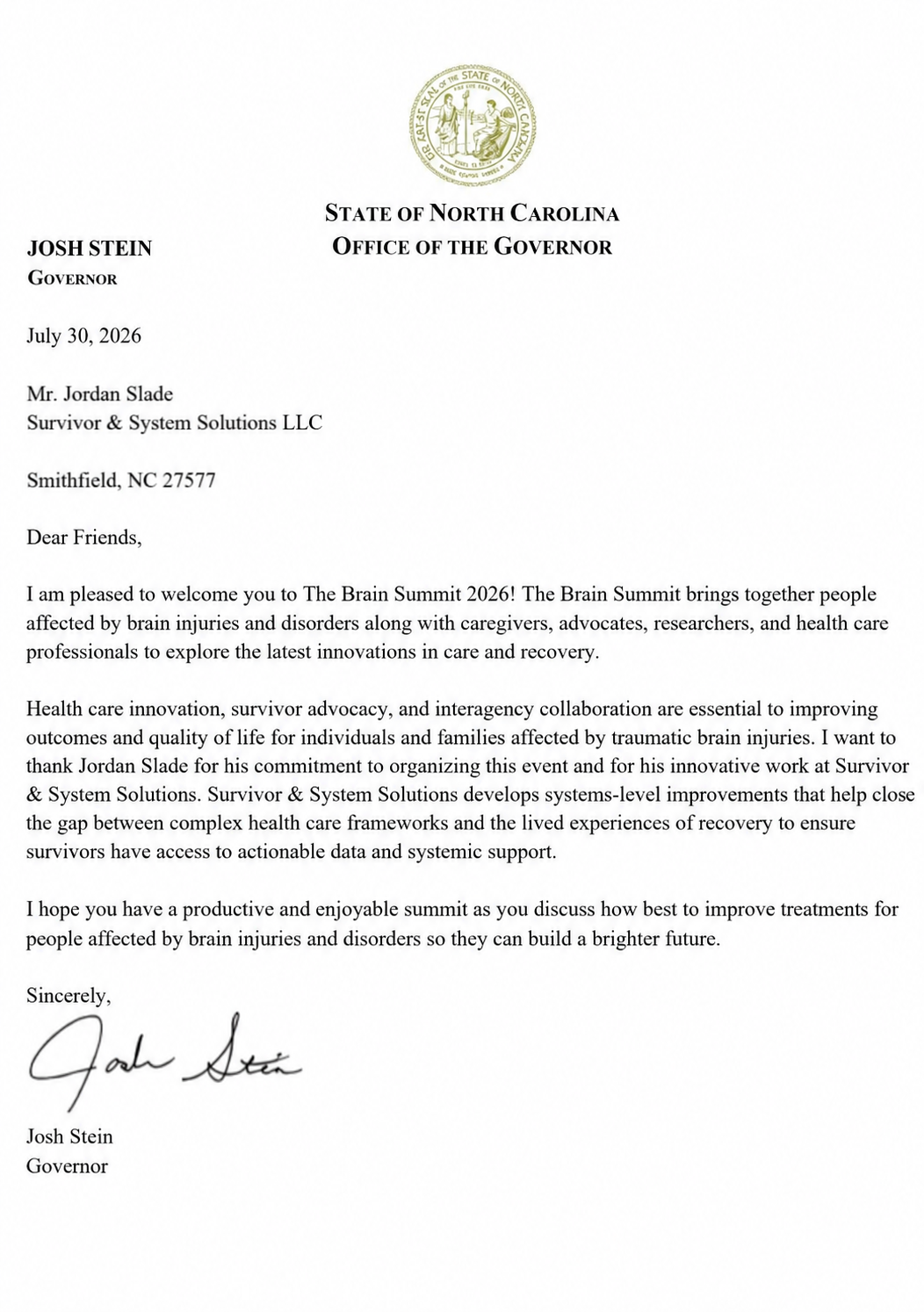
Official Recognition · July 30, 2026
A July 30, 2026 letter from Governor Josh Stein welcomed Brain Summit attendees and recognized the work of Survivor & System Solutions.
“Survivor & System Solutions develops systems-level improvements that help close the gap between complex health care frameworks and the lived experiences of recovery.”
— Letter from Governor Josh Stein, State of North Carolina
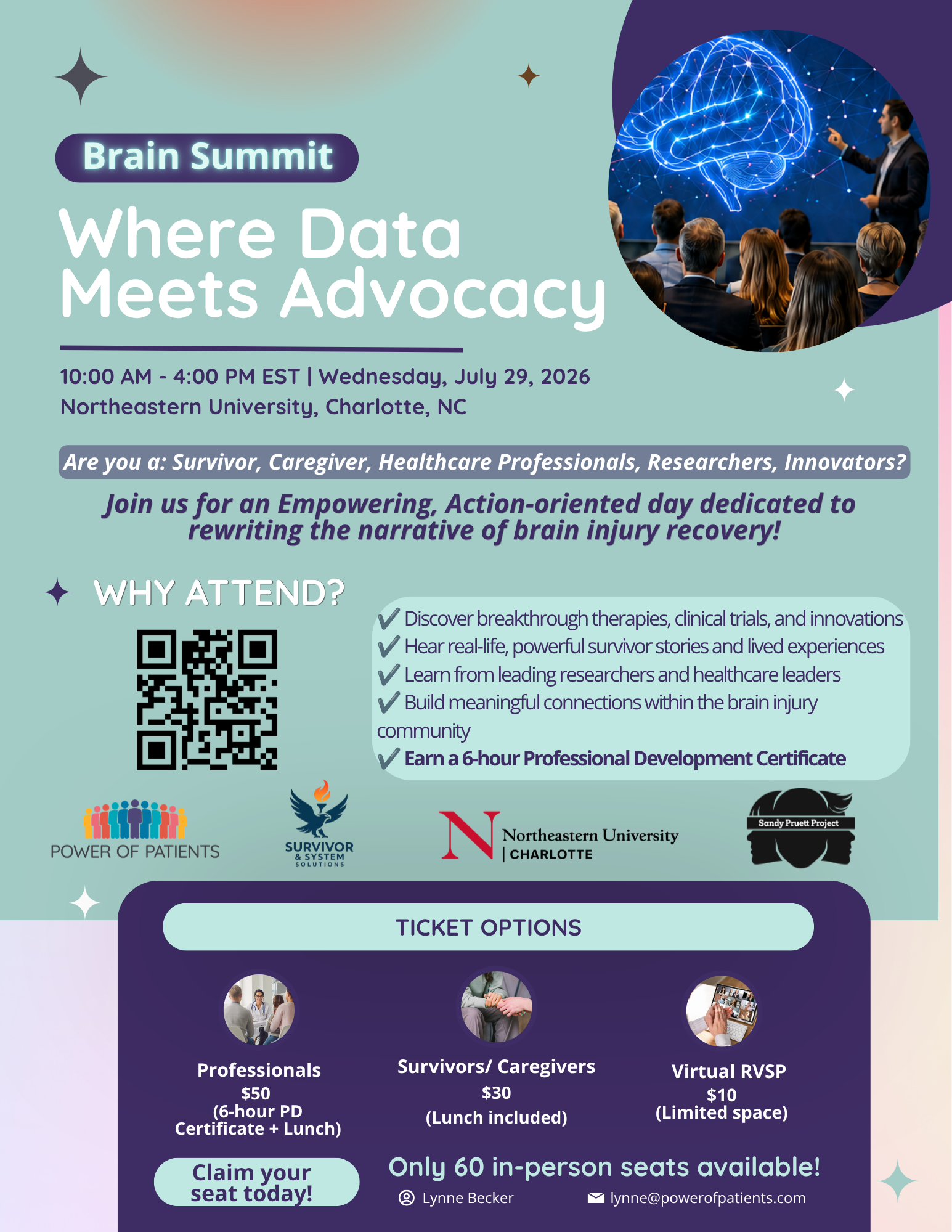
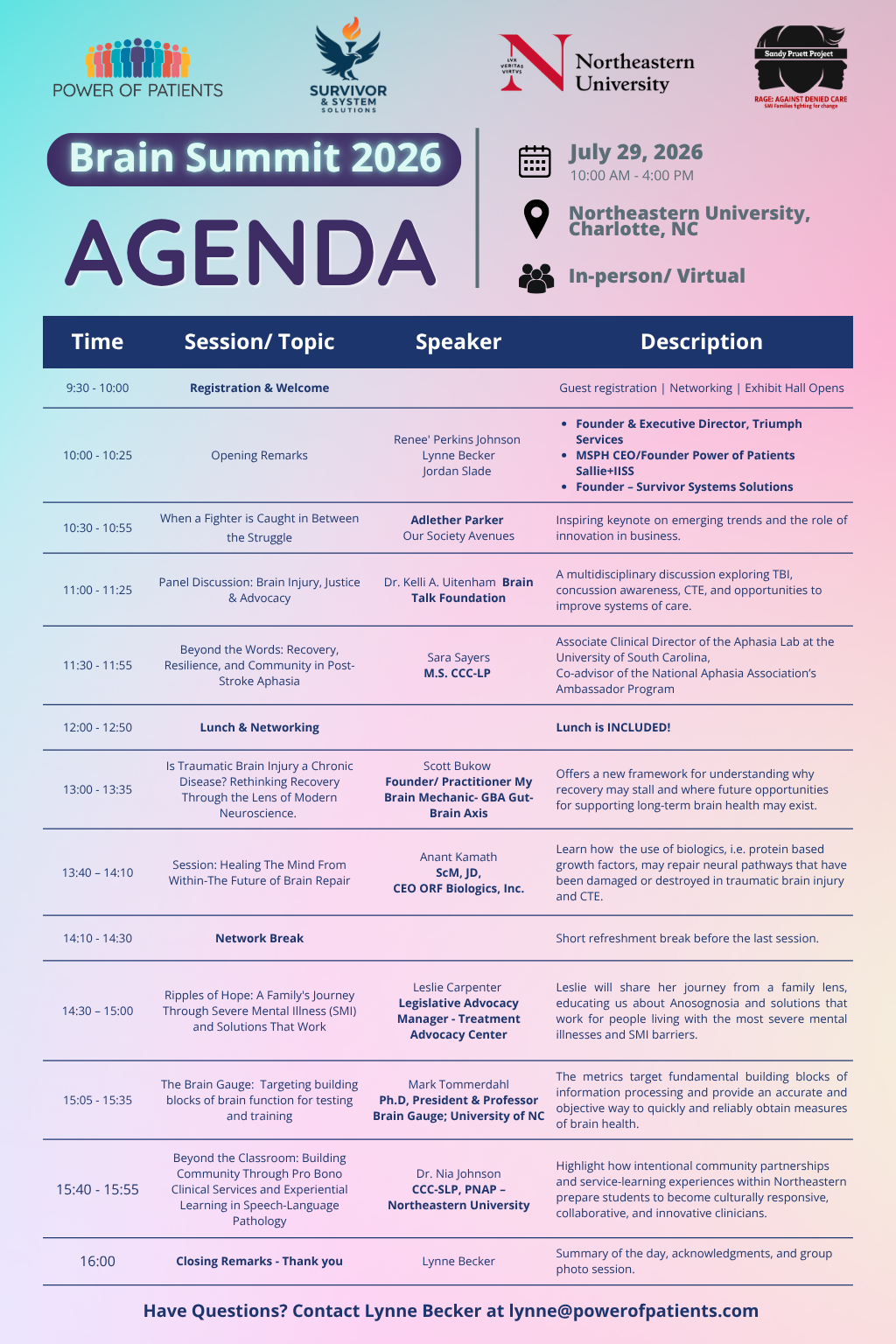
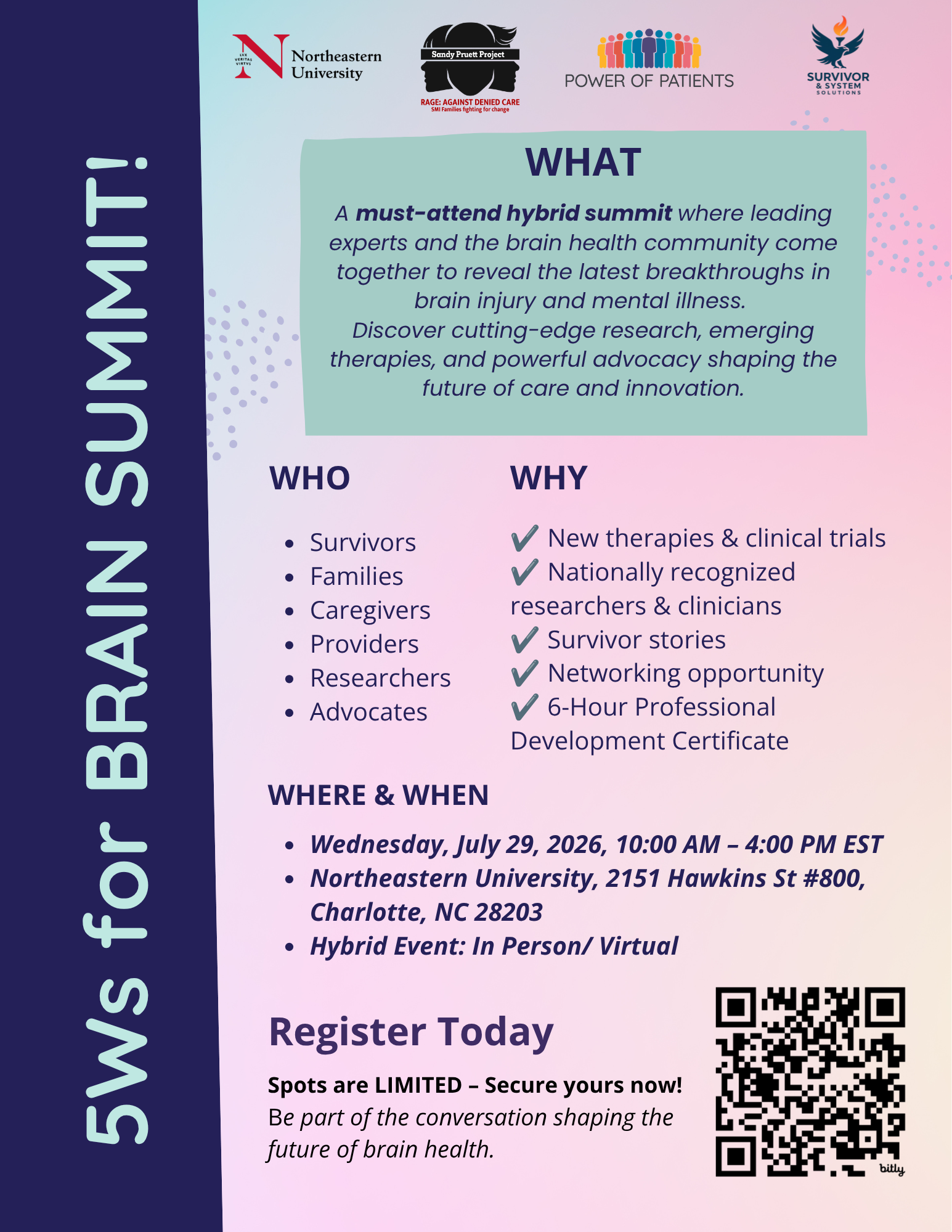
Read the Full LetterBrain Summit 2026 brought survivors, caregivers, researchers, healthcare professionals, advocates, innovators, and community leaders together in Charlotte. Explore the event materials below.

Brain injury and cognitive changes can leave people and families unsure where to begin. This space offers personal experiences and resources for finding a way forward.
What helped you get through a difficult moment or manage an everyday task? If you feel ready, your experience may help someone facing something similar. A few words are enough. You are welcome to simply read, too.
Every published insight is paired with two relevant educational resources, selected and checked by S&SS during review.
When I awakened from my coma, I had no idea I had been in an accident that caused a severe traumatic brain injury and two strokes. My life had changed, and I did not yet understand what had happened.
Support from family and friends can mean so much during this time. But I also want to speak to the person who does not have that support: you still matter, and you can take steps forward in your recovery even if you are facing this without family or friends beside you.
You do not have to figure everything out at once. Your next step might be asking your care team a question, practicing something you are relearning, or giving yourself permission to rest. Progress can be difficult to recognize when you are living through it.
Being alone does not mean you have to manage every part of recovery by yourself. A rehabilitation professional, social worker, peer mentor, or support group may help you build connections beyond the people you already know. Reaching for that support is an act of strength.
Recovery is different for everyone. It takes more than willpower, and a difficult day does not mean you have failed.
You deserve care, encouragement, and the chance to build a life that matters to you. Begin with the next step you can take today.
Information about early recovery and the support available through the care and rehabilitation process.
Resources from the Model Systems Knowledge Translation Center (MSKTC). Links checked October 15, 2026. These resources offer general education; they do not describe every cognitive condition or endorse S&SS.
A few weeks after awakening from my coma, as I became more aware of myself and my surroundings, I began searching for what I could remember about my life.
It hurt to realize that so much of the life I had built was no longer accessible in my mind. Over time, I came to feel that the person I had known myself to be was no longer there in the same way. I was still here, but I was learning who I was now.
And I had two little girls, ages one and two, who needed their father.
For months, I worked to gather the strength to be the best father I could be while relearning how to walk and manage everyday activities—showering, using the bathroom, brushing my teeth, feeding myself, and learning which foods I could safely eat.
My children gave me a purpose to keep working toward. Even while I was learning how to care for myself again, I wanted to be there for them.
For me, finding that purpose helped move my recovery forward. Your purpose may look different. It might be a person, a meaningful activity, or one small goal that matters to you. It does not have to be something big, and it is okay if it takes time to find.
Recovery takes support, patience, and more than determination alone. But having something meaningful to move toward helped me take my next step.
For people adjusting to changed roles, emotions, and parenting responsibilities after traumatic brain injury.
Resources from the Model Systems Knowledge Translation Center (MSKTC). Links checked October 15, 2026. These resources offer general education, not individualized treatment advice or an endorsement of S&SS. Jordan’s experience does not predict anyone else’s recovery.
Permission here applies only to this website. Separate permission will be requested before using your contribution in training, marketing, or other materials. To request a correction or removal, email Jordan@survivorandsystemsolutions.org. This inbox is not an emergency service.
After you send your contribution, S&SS reviews it, selects two resources related to the challenge, and checks your publication preferences. Approved contributions are added manually. Publication and a personal reply are not guaranteed.
We are building S&SS carefully, with attention to the commitments we make and the people those commitments affect.
We are preparing a proposed school consulting engagement. The next step is to finalize the scope and the operating requirements needed to begin. The work would include staff training, communication tools, and follow-up with educators.
Over the next ten years, we hope to make this work available across the country. We intend to grow through experience, local relationships, and careful review of what each engagement teaches us.
We welcome conversations with people who can help us take the next step.
S&SS needs a sound foundation to begin delivering its work. If you believe in what we are building, sponsorship can help cover the preparation and operating costs that come before an engagement.
We will discuss the proposed use of your support, agree on any recognition, and explain how we will keep you informed.
Help cover essential operating needs, including insurance and project preparation.
Support the development of training materials, communication guides, and tools for the organizations we serve.
Help make time available for staff guidance, feedback, and follow-up after changes are introduced.
Professional services, useful resources, and introductions to potential partners are also welcome.
To discuss a contribution or an introduction, contact Jordan directly.
Tell me what your team is facing and what you hope could be different. We can talk through whether S&SS is a good fit and what the work might involve.
For sponsorship, partnership, or questions about our work, you are welcome to reach out here too.
Email Jordan Slade
Jordan@survivorandsystemsolutions.org
Phone
(618) 334-2051
Please keep your first message general. Do not send medical or student records. Email links open your email app.